
Mulch, Pine Straw and River Rock in Acworth and Across Georgia
Refresh and enhance your landscape beds with professionally installed pine straw, mulch, or decorative river rock. We handle everything from bed preparation and clean, defined edging to material delivery and installation, leaving your property with a fresh, clean, and finished appearance.
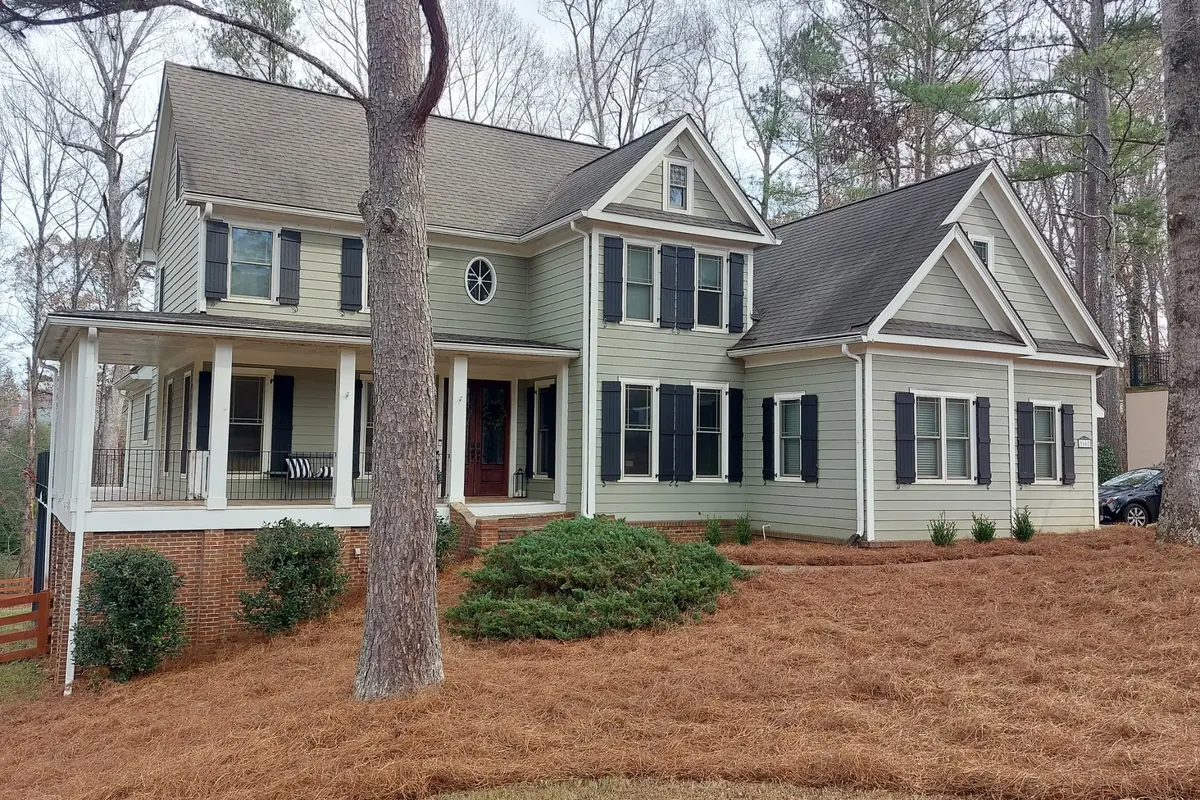
Three materials, the same three jobs
Pine straw, hardwood mulch and river rock all do the same work. They hold moisture in Georgia clay, they keep the soil temperature from swinging, and they keep weed seed from getting light. Which one you want comes down to how the beds are planted, how often you want to think about them, and what the house is made of.
Most properties end up with two of the three. Straw in the wooded back, mulch in the front beds, rock in the side yard nobody walks through.
How much you need
Mulch and rock are sold by the cubic yard. Pine straw is sold by the bale. Here is the math you can do on the back of an envelope before anyone quotes you.
Mulch and river rock
- Measure the bed. Length times width gives square feet. A bed 30 feet long and 4 feet deep is 120 square feet.
- Pick a depth. Three inches for hardwood mulch in a planted bed. Two inches for river rock.
- Divide by 324. Square feet times depth in inches, divided by 324, gives cubic yards. So 120 times 3, divided by 324, is 1.1 cubic yards of mulch.
One cubic yard of hardwood mulch covers about 100 square feet at three inches. One cubic yard of river rock covers about 160 square feet at two inches and weighs roughly 1.3 to 1.4 tons, which is why rock gets wheeled instead of carried.
Pine straw
A standard square bale covers 40 to 50 square feet at a settled depth of about three inches. That same 120 square foot bed takes roughly three bales. A thousand square feet of bed takes 20 to 25. Bale size and compression vary by supplier, so we count the beds on site instead of guessing off a photo.
How deep, and where not to put it
- Two to three inches in a planted bed. Past four inches you starve the roots of air and hold water against the crowns.
- Keep every material about three inches back from a tree trunk and off the stems of shrubs. Material piled against bark holds moisture, and moisture against bark rots it.
- Do not stack new mulch on an old matted layer year after year. If what is there is already three inches and packed, some of it comes out first.
- Keep river rock out of beds you plan to replant. Getting rock back out of a bed is a bad afternoon.
When to refresh in North Georgia
Pine straw is the one that moves. It breaks down fast, it slides off a slope after a hard rain, and it flattens under the weight of a wet spring. Most yards up here take straw twice a year, once in early spring after the pollen quits and once in late fall.
Hardwood mulch holds its color for a season and its structure longer than that, so once a year in spring is normal, with a light top dress in the fall if the beds face the street.
River rock does not break down. What it does is collect leaves and pine needles, and that layer turns into soil, and then weeds root in the top of your rock. Blow it out twice a year and rock stays right for a decade.
What happens before the material goes down
- A fresh spade edge cut on every bed so the line still holds after the spring rain
- Weeds and crept-in turf pulled out of the bed, roots and all
- The old matted layer raked out where it has gotten too deep
- The drive, the walks and the turf blown clean before we pull out
Delivery only, or delivered and installed
We do both. If you have the weekend and a wheelbarrow, we will drop the material where you want it. Most people would rather it be finished when they get home, and that is the job we usually get called for.
Pine Straw, Mulch or River Rock
The five things people actually ask before they pick one. Read down each column, then call and tell us which you want.
Pine Straw
Cost
Lowest cost per square foot of the three. It is baled all over Georgia and there is plenty of it.
How long it holds
One season. It breaks down and flattens, and it slides on any real slope after a hard rain.
Look
Soft, rust colored and informal. It suits pines, azaleas and a wooded lot, which is most of North Georgia.
Best for
Large beds, natural areas, wooded lots, and anywhere you want a lot of ground covered without a big bill.
Weed control
Fair. Three settled inches block most seed, but it thins fast, so plan the refresh before it stops working.
Hardwood Mulch
Cost
Middle of the three per square foot. It lasts long enough that the yearly cost lands close to straw.
How long it holds
A full season for color and longer for structure. It breaks down into the soil, which is a feature in clay.
Look
Dark, tidy and defined. It is what makes a bed edge read as a line from the street.
Best for
Front beds, foundation plantings, anything that is part of the curb appeal, and any bed with tired soil.
Weed control
Good. Three inches of hardwood shades out most annual weed seed for the season.
River Rock
Cost
Highest up front by a wide margin. It is also the last time you buy material for that bed.
How long it holds
Years. It does not decompose. It will sink into clay over time if it went down without fabric under it.
Look
Clean, hard and permanent. It reads right next to brick or stone and out of place around azaleas.
Best for
Drip lines, dry creek beds, drainage swales, side yards nobody walks, and beds you will not replant.
Weed control
Good at first, then only as good as the upkeep. Once leaves break down on top, weeds root in that layer.
How We Handle a Bed Refresh
The material is the easy part. The prep is what makes it last.
We count the beds on site
Bale counts and yardage come off a measurement, not a photo. You get the number before anything is ordered and there is no charge to have us come measure.
Edge first, material second
Every bed gets a fresh spade edge and the weeds pulled before a single bale is cut open. That is what makes the line hold through spring.
On a schedule if you want one
Straw twice a year, mulch once with a fall top dress. We can put it on the calendar so you are not the one remembering it.
Mulch and Pine Straw Questions
How much pine straw do I need for a 1,000 square foot bed?
Twenty to twenty five standard bales at a settled depth of about three inches. One bale covers 40 to 50 square feet. Bale size varies by supplier, so we count the beds on site before we quote.
Pine straw or hardwood mulch for a yard in North Georgia?
Pine straw if the beds are big, wooded and informal, or if you want the most ground covered for the money. Hardwood mulch if the beds are out front, if you want a hard edge that reads from the street, or if the clay needs the organic matter. Plenty of properties get both, straw in the back and mulch out front.
How often does mulch need to be refreshed?
Hardwood mulch once a year, usually in spring, with a light top dress in the fall if the beds face the road. Pine straw twice a year up here, because it breaks down and slides. River rock does not get replaced, it gets blown out.
Does river rock stop weeds for good?
No. Rock stops weeds coming up from underneath and it does that for years. What gets you is what lands on top. Leaves and pine needles break down in the rock and weeds root in that layer instead. Blow it clean twice a year and rock stays clean.
Do you cut a fresh bed edge before you install?
Every time. The spade edge is the difference between fresh material and a finished bed, and it is what keeps the material in the bed instead of on the lawn after a storm.
Can you haul off the old mulch?
Yes. If the existing layer is already three or four inches and packed down, some of it needs to come out before new material goes on. It goes in the truck with everything else.
Do you deliver material without installing it?
Yes. We will drop mulch, straw or rock where you want it and leave you to it. Tell us the spot when you call so we are not blocking a drive you need.
What Goes With a Bed Refresh
Landscape Design
Beds, borders, trees and seasonal color planned around North Georgia clay, shade and slope.
Learn moreProperty Cleanups
Spring and fall cleanups, storm debris, overgrown lots and leaf haul-off. The pile leaves with us.
Learn moreResidential Lawn Maintenance
Weekly and bi-weekly mowing, edging, weed eating and blow-off, cut at the right height for the season.
Learn moreFree Estimates. Residential & Commercial.
Tell us about your property and the work you’re looking to have done. Owner and operator Hunter Henderson will personally come out to meet with you, walk the property, discuss your project, and provide a free, no-obligation estimate—never a third-party estimator.
Licensed & Insured · 10+ Years of Trusted Service · Serving All of Georgia